MOFAC





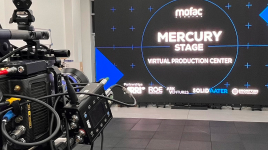
Real-Time Content
Production Pipeline
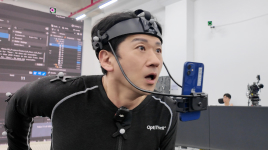
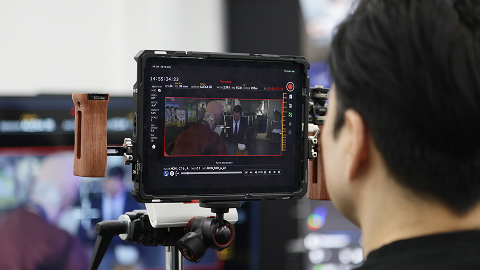
We build our production pipeline around the creator.
Powered by real-time engines, it enables artists to review visuals instantly—sparking creative inspiration and elevating storytelling.
Our pipeline preserves the creator’s original vision throughout post-production, delivering the highest-quality results.
Enhances Creative Inspiration & Storytelling
Real-Time
Feedback
Integration
-
Script
Storyboard -
Visualization
through VP -
Review
-
Production
& VFX
Virtual
Storycraft
Core
Engine
Narrative
Enhancement
A storytelling optimization system built
to strengthen your story.
A company that strives for synergy in its design solutions,
encourages creative expressions,
and acts as a central nexus for meeting diverse customer needs.


We incorporate pre-visualization into production and review to strengthen narrative development and maximize the quality and impact of every story.
- Minimize
Production Risk - Refine story structure and character settings based on audience feedback prior to principal photography.
- Improve
Content Quality - Boost emotional immersion and story comprehension through screening reviews to achieve maximum content quality.
- Increase Efficiency
- Locking the storyline in early production reduces production costs and increases the potential for commercially successful content.
- Refine Target Audience
- Utilize screening reviews to pinpoint target demographics and build data-driven marketing strategies.
News & Articles
-
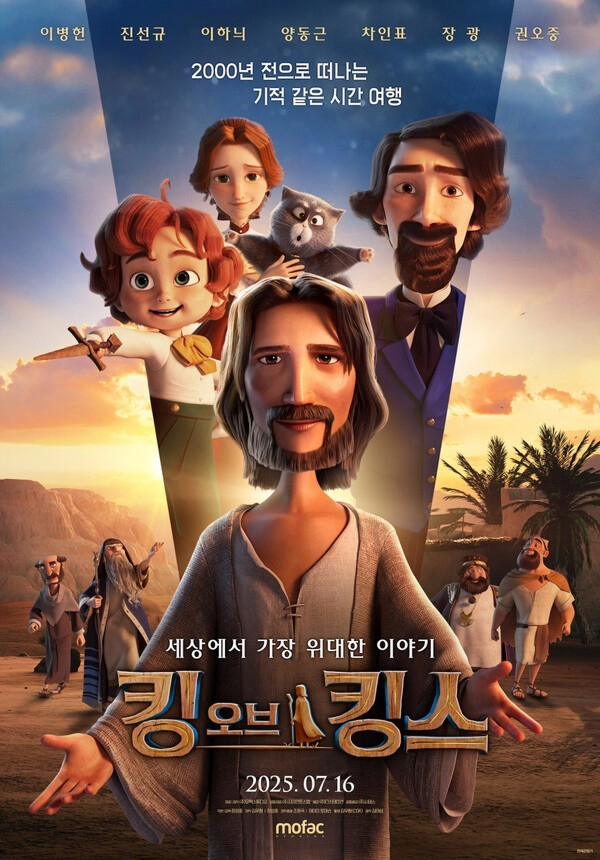
Mofac Studio, ‘King of Kings’ Producer, Raises ₩6 Billion from Altos Ventures
SEOUL, South Korea — Mofac Studio, the animation company behind the film King of Kings, announced on October 13 that it has secured an investment worth ₩6 billion (approx. US$4.4 million). The funding round was led solely by Altos Ventures.Mofac Studio was founded by Director Jang Seong-ho, a first-generation Korean VFX (visual effects) expert. Jang has worked on numerous high-profile projects, including Haeundae, Roaring Currents, and Sweet Home. After more than a decade of planning and production, Mofac released the feature-length animated film King of Kings in April 2025.Based on a novel by British literary giant Charles Dickens, King of Kings depicts the life of Jesus. Upon its North American release in April 2025, the film grossed ₩10 billion in its opening week, ranking No. 2 at the box office, and surpassed ₩27.2 billion (US$19.1 million) within just a few days. It broke a 27-year record previously held by The Prince of Egypt in the biblical animation genre and earned an A+ CinemaScore, proving both its critical and commercial appeal. In Korea, the film became the second highest-grossing Korean animated film of all time by its fifth week in theaters.The film also received standing ovations and critical praise at the Kennedy Center in Washington, D.C., a symbolic venue for American conservative culture, marking a rare case of a Korean mid-sized studio breaking into mainstream U.S. culture. Rather than relying on expensive new IP, Mofac adopted a strategy of reinterpreting expired copyrights, presenting universal storytelling that resonates with audiences worldwide.Mofac’s strength lies in its technical innovation. The studio integrated Unreal Engine, developed in Korea’s gaming industry, into its film production pipeline to enable real-time simulation and review, reducing costs and production time while improving quality. This approach has been hailed as a technological leap even Hollywood’s major studios have yet to fully implement. Mofac also utilizes AI-based virtual sets and editing, cutting production time by up to 30%.An Altos Ventures representative commented:“Korea is one of the most creative and capable markets for content production. Mofac has developed a well-calibrated growth strategy based on technological innovation, global IP strategy, and proven box office potential in North America. We see strong potential for Mofac’s global expansion through this investment.”Mofac CEO Jang Seong-ho added:“This investment will allow us to scale up planning and production for our next feature animation. We will strengthen R&D in AI and virtual production, and accelerate the expansion of our global distribution network, particularly in North America.”
-
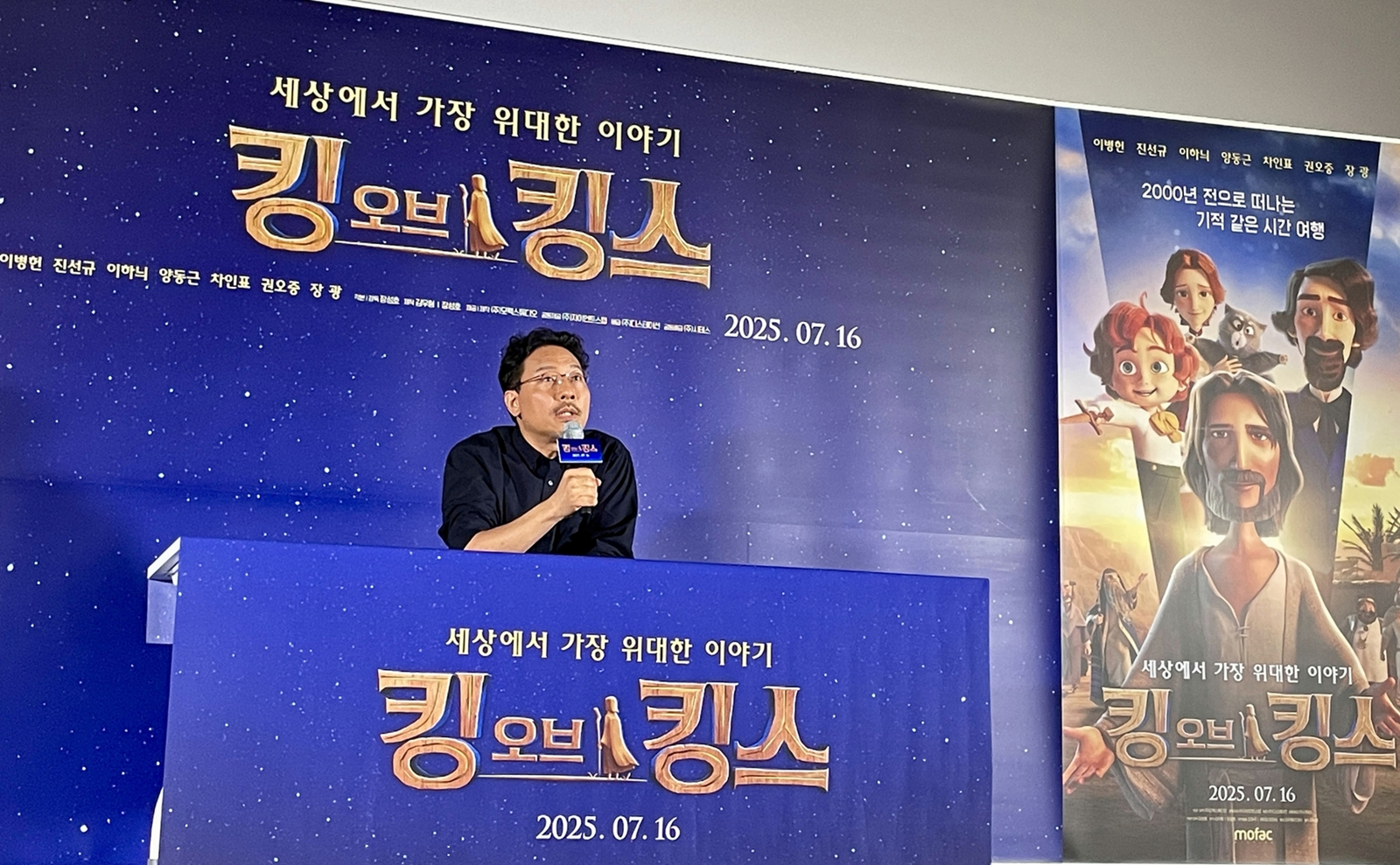
'Universal love, family' themes fuel success of 'King of Kings': director
"I think 'The King of Kings' was well-received in North America because of its story of universal love and family."Jang Seong-ho, who wrote and directed the animated feature, on July 2 said the plot was his work's secret of success at a media screening and news conference for the movie at the multiplex CGV Yongsan I'Park Mall in Seoul's Yongsan-gu District."The King of Kings" is based on the story "The Life of Our Lord" written by British writer Charles Dickens. In the film, he narrates to his son Walter the story of Jesus Christ from his birth to resurrection.Premiering in North America in April, the film in its first 17 days of release earned USD 60.3 million there at the box office, replacing the Oscar-winning blockbuster "Parasite" (2020) with USD 53.84 million as the most successful Korean film in that region."I was concerned that only certain religious groups would watch the film since it's about Jesus Christ, but it wasn't like that at all in the U.S.," the director said. "Because it's a story of love and reconciliation, even ordinary (nonreligious) people can watch it without qualms.""The King of Kings" has also received high ratings from North American moviegoers with a 98% score on Rotten Tomatoes' Popcornmeter and an "A+" from CinemaScore. Critical and fan acclaim for the feature attests to its artistic value and mass appeal.Based on scores from audiences as they leave a theater, CinemaScore has rated thousands of movies since its launch in 1979 but only 128 have received the top grade of "A+."Planning for "The King of Kings" began in 2015 but it took 10 years to make. A huge production cost was necessary to enhance quality, so Jang mainly targeted North America instead of Korea to recoup his costs.The director said he chose Jesus because he believed that a familiar topic for American audiences was necessary for success. Set elaborately from the early planning stages, his strategy worked.Jang also sought to achieve technological advances. Based on his 30 years of experience in visual special effects, he applied to animation the quality and filming techniques of live-action films. The result was delicate and dynamic camera movements.Another huge plus was the Hollywood stars who made up the voice cast for the English-language version like Kenneth Branagh, Uma Thurman, Oscar Issac and Pierce Brosnan. For the Korean edition, the voices provided by top domestic actors like Lee Byung-hun, Jin Sun-kyu, Lee Hanee, Yang Dong-geun and Cha In-pyo added depth and vivacity."I felt unusually lucky in casting. We got such amazing actors that even people in Hollywood asked me how this was possible," Jang said. "I think (the actors) responded mostly because it was good material and a good production."Now shown in 50 countries, "The King of Kings" will reach 90 markets by year's end and possibly 120 if those under discussion such as China approve its release. The movie will debut in Korea on July 16.
-

Director Jang Seong-ho announces 'The King of Kings' release in Korea after U.S. success
The King of Kings, which topped the North American box office as the highest-grossing Korean film of all time, is meeting domestic audiences with a lavish voice cast.On the afternoon of the 2nd, a media preview and press conference for the film The King of Kings (directed by Jang Seong-ho) was held at CGV Yongsan Ipark Mall in Yongsan-gu, Seoul. During the event, Director Jang Seong-ho attended to share insights.The King of Kings is an animated film depicting a journey into the greatest story of 2,000 years ago with Charles Dickens, a renowned British author, and his youngest son, Walter. It was inspired by the unpublished manuscript The Life of Our Lord that Dickens wrote for his children, known for works such as Oliver Twist and A Christmas Carol.Director Jang Seong-ho, who took charge of production, screenplay, and direction, said, "We planned this project targeting the North American market, so we first released it in the United States. Finally, it has been released in our home country, Korea. We held several screenings for pastors, but this is the first general screening, so I am quite nervous and curious about how people will perceive the film."Earlier, The King of Kings surpassed the North American cumulative revenue of $53.84 million for Parasite just 17 days after its release in April. As of now, its cumulative revenue has exceeded $60.3 million, making it the highest-grossing Korean film in North America. It also ranks 2nd among all-time Asian animated films in North America, following Pokémon: The First Movie ($85.74 million).In response, Director Jang Seong-ho stated, "The material deals with a figure like Jesus, which raises concerns about only receiving reactions from specific religious groups. However, that was not the case in America. The general audience's reactions were very positive. I was especially grateful that we received a Rotten Tomatoes score of 98% and a CinemaScore of A+. I believe that The King of Kings resonated as a universal love story and a family tale. I hope it will be the same in Korea."When asked about his focus on targeting the North American market, he explained, "I have been a movie buff since I was young. I always dreamed of leaving my mark with my work. I entered the film industry through visual effects after working in computer graphics. After some time, I realized I was technically prepared to create a good product. In the meantime, I had written many scripts and was preparing different things, and around 2015, I thought it was time to try. However, to utilize our technology, a smaller budget wouldn't suffice. At that time, Korean animation was mainly focused on content for toddlers, and even with a large budget, it was hard to exceed 1 billion won. We needed a larger budget to enhance the quality with our technology; thus, it naturally led to targeting the North American market."Therefore, he needed to find material that would work in the American market and had many thoughts about that during the planning stage. Director Jang Seong-ho said, "Even Disney, starting with Snow White in 1937, has established a long tradition of works based on original stories. There aren't many successful original projects. Thus, we began searching for familiar original-based materials for them. I listed works whose copyrights had expired and noticed that Charles Dickens wrote a book called The Life of Our Lord. The United States is a country founded by missionaries, and even non-believers cannot deny that Jesus was a historical figure. As a major historical figure influencing humanity, I thought it would be quite viable in the North American market. Surprisingly, there has never been a theatrical full-length film with Jesus as the protagonist. I thought that with well-executed production, it could gain significant symbolism."However, there were concerns about the potentially dull story and heavy subject matter making it difficult to produce commercially entertaining content. Director Jang Seong-ho explained, "That's why Dickens brought the format of telling the story to a young child. As you know, Charles Dickens gained popularity by diligently holding readings for an audience who couldn't read. I sensed that I could draw upon interesting methods there. Especially if it's something conveyed to one's own child, it would be heartfelt. The child could immerse themselves in the world, and I believed we could bring elements of adventure and fantasy as if traveling through time. It seems that audiences in America found that format intriguing."Regarding plans for release in countries outside North America, he stated, "I heard from the distributor that 46 countries have already released the film or are in the process. It has been reported that the release has been confirmed in 90 countries by the end of the year. It seems to primarily be released in non-English-speaking countries during the Christmas season. Including countries currently under negotiation, it seems we will release in a total of 120 countries. I was told that if all this happens, it will be an unprecedented record."When asked about the aspects he paid attention to in adapting the Bible into the story, he replied, "The Bible contains difficult narratives filled with parables and metaphors. It is challenging to explain such content to young children, so I had to remove a lot when writing the script. What should I focus on to tell the story? After watching the film, I wanted the audience to feel as if they had experienced everything from birth to resurrection, so I concentrated on one theme, which I believed to be 'love.' Additionally, to ensure that the subplots with Dickens and his son wouldn't drift away while not contradicting the main plot, we needed to progress within the same thematic framework. I viewed their relationship restoration as the core story. By telling the story of the restoration of the relationship between Dickens and his son alongside the relationship between God and humanity, I believed it would naturally blend within a single theme. Especially for those of faith, there would be the enjoyment of finding the biblical metaphors embedded throughout."Conversely, when asked what aspects would appeal to general audiences who are not Christian, he stated, "I believe that even non-religious individuals would be open to watching a story about relationship restoration and love. It is a narrative that can relate to universal emotions. I am confident that it was made to a high standard worthy of the ticket price, leading to its success in the United States, and I can boldly recommend it as a film worth watching in Korea, regardless of religious beliefs."He continued, "In animation, camera work can utilize virtual cameras, and everything can be done if you set your mind to it. However, it's not without drawbacks, as it can reduce realism. The principle we established is that the camera only moves within the physical range that is possible for actual filming. The lighting was also set up like on a real film set. Although it is animation, I can say that it has a cinematic quality. I aimed to create a film that is worth watching in theaters. Immense effort was put into the music and sound. The voice dubbing work took about a month in Australia, which I believe is a first for animated dubbing processes. The supervisor worked on Mad Max: Fury Road, and it was said to have the highest quality among animated dubbing, thus greatly enhancing it. I can assert with confidence that in terms of quality, it is likely the best ever in Korean animation history. It is a film that I believe does not waste the ticket price and is worth seeing in theaters."The domestic dubbing of The King of Kings features an impressive cast, including actors Lee Byung-hun, Jin Sun-kyu, Lee Ha-nee, Yang Dong-geun, Cha In-pyo, Kwon Oh-jung, Jang Kwang, and Choi Ha-ri. Director Jang Seong-ho commented, "It seems that I have been incredibly lucky with the casting. Even in Hollywood, they were surprised by the amazing cast. They said things like 'How could such casting be possible?' and 'This casting is unlikely to happen again.' It seems that they responded positively because it is a good story and a good work. The cast was not selected based on the good response in the U.S.; it was almost completed even before that. Many people around me, who showed interest in the work, assisted greatly. Through these individuals, the casting was completed swiftly and smoothly. Some recommendations were made, and when I proposed it to them, they accepted almost immediately, leading to an efficient and quick conclusion to the casting process."When asked about any interesting episodes during the dubbing, he shared, "Actor Lee Byung-hun is already an incredibly outstanding actor, so there's no need to mention him. In fact, he is not religious. Nonetheless, he expressed that while working on this project, he became interested in the universal love story and the figure of Jesus, which was fascinating. I found it interesting to observe how he interpreted the character while acting. Ultimately, there was an emotional exchange reminiscent of playful banter, with some tension between him and his son. He managed to find that chemistry well, which I found intriguing."He added, "The other actors were also remarkable. In particular, actor Lee Ha-nee is not only a skilled performer but also I discovered that she sings beautifully. Perhaps that's why her voice is so lovely. I believe she will showcase peak levels in her career as a professional voice actor. Actor Jin Sun-kyu played the role of Jesus, and I had some preconceived notions since he often plays villains. However, his voice was young and pure. Those who only hear Jin Sun-kyu without seeing him may find it surprisingly different. Perhaps due to his experience as a stage actor, his vocal skills were excellent throughout the entire project, resulting in immense satisfaction."Finally, Director Jang Seong-ho remarked, "It seems that by chance, I have become an unexpected presence. There were difficult journeys and hardships, but we completed it and managed to bring it to the world, and for that alone, I feel quite proud. I hope that works like this become successful so that others can take on challenges and create even better works; thus, I hope our film is well-received in Korea and achieves good outcomes."Meanwhile, The King of Kings is set to be released domestically on the 16th.[Photo] OSEN DB, Distation


MOFAC’s
IP Contents
Curious to see more of our work?